
English at working fluency
English is an official language of the Philippines and the language of instruction in higher education. Staff write client-facing email, join video calls and handle escalations without a translation layer.
English fluency, a deep graduate pipeline, cultural affinity with Western business and twenty years of outsourcing infrastructure. This page explains where that case is strong, and where it is not.
In short
Companies outsource to the Philippines because it combines working-fluency English with a large, renewable graduate pipeline and two decades of outsourcing infrastructure. English is an official language and the language of higher education, so staff handle client calls and written escalations directly. Cultural familiarity with US and UK business norms shortens onboarding. The country sits at UTC+8, which a shift roster can point at any major market, and fully loaded cost typically runs well below equivalent Western hires.
Philippines outsourcing advantages
None of these is unique on its own. The combination is what makes the Philippines the default for customer-facing and operational work.
English is an official language of the Philippines and the language of instruction in higher education. Staff write client-facing email, join video calls and handle escalations without a translation layer.
Hundreds of thousands of graduates enter the workforce each year across business, IT, engineering and design. That volume is what makes specialist hiring repeatable rather than lucky.
Decades of American commercial and educational influence show up in practical ways: familiarity with US service norms, brands, holidays and written communication style.
The Philippines has run outsourcing at national scale since the early 2000s. Power redundancy, business-district office stock, telco capacity and an experienced management class already exist.
A single location can cover US, UK, Australian and APAC hours by shift. US Eastern business hours land on a Philippine night shift; Australian and Singapore hours overlap the local day almost entirely.
Fully loaded cost per specialist typically runs well below equivalent US in-house hires, and salary inflation has been steadier than in several competing markets.
Honest comparison
Every market on this table is a good answer to some question. The useful exercise is matching the market to the work, not ranking them.
Qualitative comparison based on KDCI's experience hiring and operating in these markets. Not a benchmark study.
The Philippines' talent market
2 Weeks
From brief to a deployed specialist
#1 in Asia
For English proficiency
UTC+8
Covers US, UK and APAC hours
1.9M+
Employed in the IT-BPM sector
Long form
The Philippines became the world’s customer-experience capital for a reason that has little to do with cost. English is an official language, taught from primary school and used as the medium of instruction in universities. That produces a workforce that does not merely read English but works in it — writing escalation emails, running a discovery call, de-escalating an angry customer in real time. For any role where a person represents your brand to another person, that single factor outweighs almost everything else.
A large annual flow of graduates across business, IT, engineering and design means a well-run recruiter can fill a specialist role in weeks rather than quarters, and can fill it again when someone leaves. Smaller offshore markets can produce excellent individuals but cannot always produce the second and third one on demand. Repeatability is what turns an offshore experiment into an operating model.
Twenty years of national investment in the IT-BPM sector means the boring things are solved: office stock in business districts, power redundancy, telco capacity, security practice, and a management class that has run offshore delivery before. You are not the company teaching a country how to outsource.
At UTC+8 with no daylight saving, the Philippines can cover any market by shift. US Eastern hours run as a night shift with a statutory differential, which the labour market is built around. UK hours run as a late shift. Australian and Singapore hours overlap the local day almost completely. The planning is predictable because the clock never moves.
Deep or specialized engineering. If you need a large team of distributed-systems, compiler or quantitative engineers, India and Eastern Europe have more depth and you will fill roles faster there. The Philippine AI and data pool is growing quickly and is strong at applied work, but honesty is more useful to you than enthusiasm.
Real-time collaboration with US teams all day. If your work depends on constant synchronous pairing across full US business hours, Latin America is the better fit. Overlap during the local day beats a night shift for that pattern, and it is worth the higher cost band.
Multilingual European coverage. German, French, Nordic or Dutch language support is not a Philippine strength. Eastern Europe or a nearshore European hub will serve you better.
Work that needs physical presence. Anything requiring on-site attendance in your market is not an offshore question at all.
OUR BASE
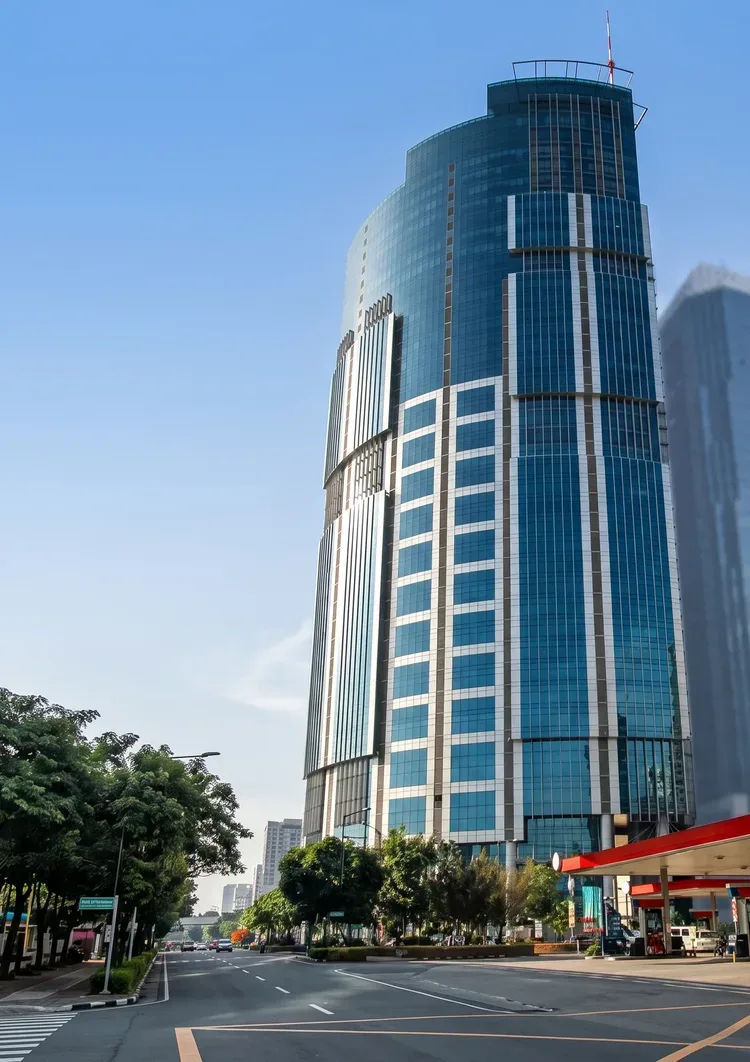
KDCI operates from One Corporate Center, one of Metro Manila's most recognized business addresses — a PEZA-accredited tower in the Ortigas CBD that attracts the same calibre of multinational tenants our clients expect us to work alongside.
The building sits at the corner of Meralco Avenue and Julia Vargas Avenue in Ortigas Center, Pasig — one of Metro Manila's three major business districts alongside BGC and Makati. At 45 floors and PEZA-accredited, it is the kind of address that draws multinational corporations, BPO enterprises, and financial institutions. For KDCI, it means operating in an environment built around the performance and security standards that global businesses require.
PEZA
Accredited
Philippine Economic Zone Authority accreditation — supporting export-oriented firms with fiscal incentives and regulatory compliance.
45
Floors
One of Metro Manila's tallest office towers, housing multinationals, BPO enterprises, and financial institutions as co-tenants.
24/7
Access
Round-the-clock building access, 17 elevators, and 9 basement parking levels — infrastructure built for operations that don't stop at 5pm.
CBD
Location
Ortigas Center is accessible from Quezon City, Makati, BGC, Mandaluyong, and Rizal Province — widening the talent pool KDCI can draw from compared to single-district addresses.
FAQ
The questions buyers ask before they commit to a market, answered directly.
Companies outsource to the Philippines for four reasons: working-fluency English across the general workforce, a large annual graduate pipeline, strong cultural affinity with US and UK business norms, and twenty years of outsourcing infrastructure that makes hiring and managing offshore teams routine rather than experimental.
Yes, for the overwhelming majority of commercial work. The country has a mature IT-BPM sector, an established legal framework for outsourcing contracts, and a Data Privacy Act modelled closely on international standards. The practical risks are ordinary supplier risks — vendor quality, staff turnover and security practice — which are managed through contract terms, access control and choosing a provider that employs its own staff.
The Philippines sits at UTC+8 with no daylight saving. US Eastern business hours fall on a Philippine night shift, which the local labour market is built around and which carries a statutory night differential. UK hours require an afternoon-to-evening shift. Australian and Singapore hours overlap the Philippine working day almost entirely.
English is an official language of the Philippines and the primary language of instruction in higher education, so professional staff read, write and present in English as a matter of course. Accent is generally neutral to North American ears, which is why the country dominates offshore voice and customer-facing work.
Most companies see a fully loaded cost reduction of roughly 60 to 70 percent against equivalent US in-house hires, depending on role and seniority. That figure should include employer contributions, benefits, recruitment cost and management overhead — comparing base salary alone overstates the saving on both sides.
The Philippines observes a substantial number of regular and special non-working holidays each year, which are published in advance by presidential proclamation; well-run engagements schedule coverage around them and pay the statutory holiday premium. On data protection, the Data Privacy Act of 2012 governs personal data handling and is supervised by the National Privacy Commission, with obligations broadly comparable to GDPR principles.
About
Who We Are
Who we are and how the management layer works.
About
Clients and social proof
Who we work with and how results are reported.
Solutions
AI Services
Hire AI engineers or build the system with a KDCI team.
Solutions
Offshore staffing
Dedicated specialists embedded in your existing team.
Solutions
Customer Support
Voice, chat and technical support in your hours.
Pricing
Engagement models
What a Philippine team actually costs to run.
Tell us the roles and the outcome you need. We come back with a shortlist, a start date, and a fixed monthly price — usually within five business days.
No obligation. If we are not the right fit, we will say so on the call.